Prove You're Human: How Biometric Tech Is Becoming the New Gatekeeper for Adult Performers
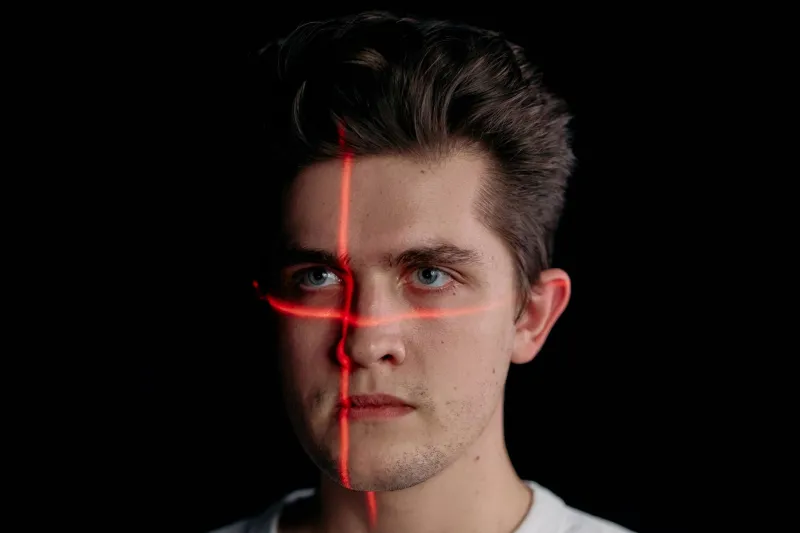
Not long ago, verifying a performer's identity on an adult platform meant uploading a government-issued ID and maybe a selfie holding it. Simple, if imperfect. Today, some platforms are asking performers to blink on command, recite phrases into a microphone, and sit still while algorithms map the geometry of their faces. Welcome to the biometric era of adult content verification — and it's moving faster than most people realize.
The push isn't coming from nowhere. Synthetic media — AI-generated video and images that can convincingly place real people's faces onto bodies they never agreed to appear on — has become a genuine crisis for the industry. Performers have found themselves starring in content they never filmed. Some discovered it through fans. Others found out from family members. The reputational and psychological damage is real, and platforms that once looked the other way are now under serious pressure to act.
What Biometric Verification Actually Looks Like in Practice
The term "biometric verification" covers a pretty wide range of tools, and different platforms are deploying them in different combinations. Here's what's actually being used right now.
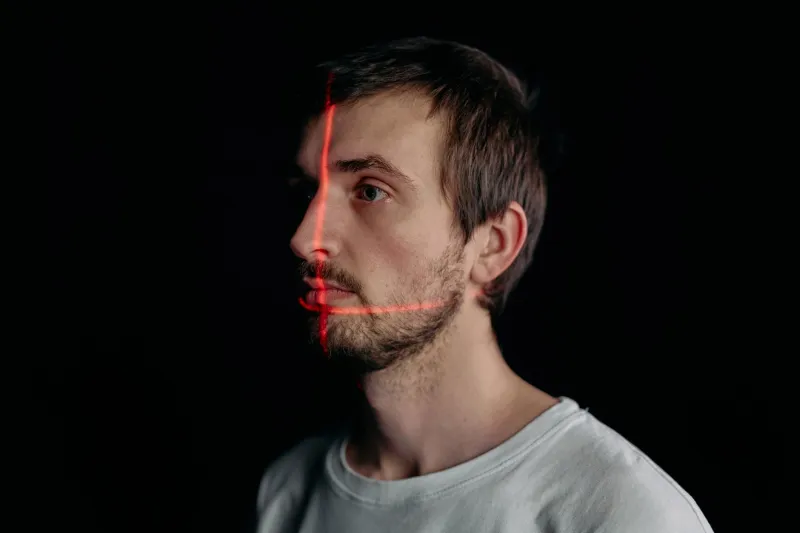
Facial recognition and mapping is probably the most talked-about. Platforms capture a high-resolution scan of a performer's face during onboarding and then compare that baseline to frames pulled from submitted content. If the geometry doesn't match — think distance between eyes, jawline shape, nose bridge dimensions — the system flags it for human review. Some platforms are running this check not just at upload but continuously, pulling frame samples from across a video to catch edits or splices.
Liveness detection is the piece that makes the whole system harder to game. A static photo of a performer's face is useless if someone can just hold it up to a camera. Liveness detection requires the actual person to be present — blinking at specific intervals, turning their head, following a moving dot on screen. It's the same tech banks use when you set up mobile check deposit on your phone, just applied in a very different context.
Voice verification is newer to the adult space but gaining traction. A performer's vocal pattern — pitch, cadence, resonance — is nearly as unique as a fingerprint. Some platforms are now requiring a short spoken phrase during check-in, which gets compared against a stored voiceprint. It's especially useful for audio-heavy content and cam-style formats where faces aren't always clearly visible.
The Limitations Nobody Wants to Talk About
Here's the part where the optimism gets a little complicated. These systems work — up to a point. Facial recognition is still demonstrably less accurate for darker skin tones, a problem that's been documented extensively in law enforcement and consumer tech contexts and hasn't magically disappeared just because the application is different. Performers of color are reporting higher rates of false flags and verification failures, which means more manual review, more delays, and in some cases, more friction getting their content approved at all.
Liveness detection can also be defeated by sufficiently sophisticated deepfakes — particularly ones generated in real time. As the verification tech improves, so does the synthetic media it's trying to catch. It's an arms race, and the gap between the two sides closes a little more every few months.
There's also the question of data security. Biometric data is about as sensitive as personal information gets. Unlike a password, you can't change your face if a database gets breached. Platforms collecting this data are sitting on an enormous liability, and the regulatory framework governing biometric data storage in the US is a patchwork at best — Illinois has BIPA, Texas and Washington have their own laws, but there's no federal standard. Performers signing up for verification are often consenting to data practices they don't fully understand.
What Performers Are Actually Saying
Opinions in the performer community are genuinely divided, and that division is worth taking seriously.
Some performers are enthusiastic. If a platform can confirm that no one else is using their likeness without permission, that's a meaningful protection — especially for those who've already had deepfake experiences. The peace of mind has real value.
But others are more skeptical, and their concerns aren't trivial. There's a fundamental awkwardness in being required to biometrically prove your own existence to a corporation in order to do your job. Performers are already subject to significant documentation requirements — ID verification, age checks, content agreements. Adding a layer of facial and voice scanning feels, to some, like surveillance dressed up as safety.
There's also a practical concern about what happens to that data long-term. Platforms get acquired. Companies fold. Data that was collected for one purpose ends up in someone else's hands. For performers who maintain strict separation between their professional and personal identities — a common and completely reasonable practice — the idea of a biometric profile sitting in a corporate database is genuinely unsettling.
Where This Is Heading
The trajectory is pretty clear: biometric verification is going to become more common, not less. Regulatory pressure, advertiser expectations, and the ongoing deepfake problem are all pushing in the same direction. The question isn't really whether platforms will adopt these tools — it's whether they'll do it responsibly.
The most thoughtful approaches being piloted right now involve giving performers more control: the ability to see what data has been collected, request deletion, and understand exactly how it's being used. Some platforms are exploring decentralized verification models where the biometric data never leaves the performer's own device — the check happens locally, and only the result (verified or not) gets transmitted. That's a meaningful improvement over centralized storage, though it comes with its own technical challenges.
For performers navigating this landscape right now, the advice from digital rights advocates is consistent: read the terms carefully, ask specific questions about data retention and sharing before signing up, and pay attention to which platforms are transparent about their verification practices versus which ones bury the details in fine print.
The technology is real, the threat it's responding to is real, and the stakes for the people whose faces and voices are being scanned are very real too. Getting this right matters — not just for the industry, but for every performer who deserves to control their own image.