Pleasure and Purpose: How Adult Creators Are Building Mainstream Careers Through Sex Education Content
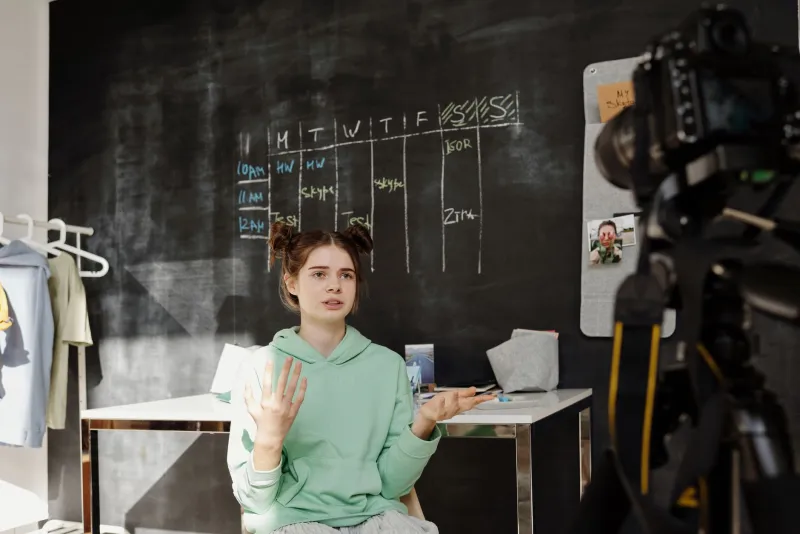
Somewhere between a traditional adult video and a health class lecture, a new category of content is quietly becoming one of the most commercially interesting spaces in digital media. Adult creators with established audiences are pivoting — partially or fully — toward sex-positive educational content, and the results are upending assumptions about where the money is and who's willing to spend it.
We're not talking about a niche experiment. The pattern is visible enough that platform analytics teams, brand partnership agencies, and media investors are all paying attention. And the creators driving it are making more, reaching further, and building more durable careers than many of their peers who stuck with traditional adult content alone.
What "Educational" Actually Means in This Context
Let's be clear about what's actually being produced here, because "educational content" can mean a lot of things. The creators finding the most success aren't just slapping an instructional title on explicit material. They're producing genuinely substantive content that covers topics like:
- Consent negotiation and communication between partners
- Sexual health basics — STI prevention, testing, contraception — delivered without clinical detachment
- Anatomy and pleasure science, including topics that are dramatically underrepresented in formal sex education curricula
- Relationship dynamics, boundary-setting, and communication frameworks
- Kink safety, harm reduction, and informed participation
Some of this content is explicit. Some isn't. What it consistently is, according to the creators producing it, is useful in a way that most adult content — and most formal sex ed — is not.
"The gap I'm filling is real," said one creator based in Chicago who has built a substantial following across both adult platforms and mainstream social media. "Sex education in this country is genuinely terrible for most people. I'm not competing with Harvard — I'm competing with a health class that didn't mention the clitoris."
Her tone is casual and direct, her content is research-backed, and her audience spans people who found her through adult platforms and people who found her through YouTube shorts and TikTok. That crossover is the point.
The Sponsorship Door Opens
For adult creators, mainstream brand partnerships have historically been essentially impossible. Payment processors, mainstream social platforms, and most consumer brands have treated adult content association as a liability to be avoided at nearly any cost.
The educational pivot changes that calculus in meaningful ways. Brands in the sexual wellness space — companies selling contraceptives, lubricants, sex toys, and health products — have become increasingly willing to work with creators whose content is framed educationally and whose audiences skew toward engaged, health-conscious adults.
"The difference between 'adult content creator' and 'sexual health educator with an adult content background' is enormous from a brand partnership standpoint," said one talent manager who works with several creators making this transition. "Same person, largely overlapping audiences, completely different conversation with potential sponsors."
This has translated into real money. Several creators who've made the educational pivot report that brand partnership income has become a meaningful revenue stream — in some cases exceeding subscription income — specifically because the educational framing made them approachable to sponsors who would never have considered them otherwise.
Beyond sexual wellness brands, some creators have attracted partnerships from relationship counseling apps, telehealth platforms offering sexual health services, and even mainstream publishers looking for authors or podcast hosts. The educational credential — even an informal one built through consistent content — opens doors.
Platform Reach Is Different, Too
One of the structural advantages of educational content is that it can exist on platforms where explicit material cannot. A creator who produces both explicit adult content and genuinely educational material can distribute the latter through YouTube, Instagram, TikTok, and podcast platforms — building audience funnels that feed back to their subscription platforms.
This is a significant competitive advantage. Purely explicit content is essentially locked out of mainstream discovery channels. Educational content isn't. The creators who've figured this out are effectively running two-track distribution strategies: educational content on mainstream platforms builds awareness and trust, and that audience converts to subscribers on adult platforms at meaningful rates.
"My YouTube channel is basically a free sample of what I do," explained one creator in Los Angeles who runs both an educational channel and an adult subscription platform. "People find me because they searched something about sexual health. They watch a few videos. They trust me. And then some percentage of them want more, and they know where to find it."
The Authenticity Premium
What separates the creators building durable careers through this pivot from those who try it and fail is, according to pretty much everyone in this space, authenticity. Educational content that feels like a cynical rebranding exercise — the same material with a different title — doesn't perform. Audiences, whether they're coming for education or entertainment, are good at detecting when they're being managed.
The creators succeeding are the ones who are genuinely interested in the subject matter, who do actual research, who cite sources, who acknowledge when they don't know something, and who treat their audiences as adults capable of handling real information.
That standard turns out to be a filter that works in their favor. It's harder to fake, which means there's less competition at the top. And it creates genuine expertise over time — creators who've been producing research-backed sexual health content for several years have real knowledge that compounds.
The Mainstream Resistance Isn't Gone
It would be misleading to paint this as a fully open path. Even with educational framing, creators with adult content backgrounds face resistance from some mainstream platforms and brands. YouTube has demonetized and restricted educational sexual health content from creators without adult backgrounds; it's even more aggressive with creators who have explicit content elsewhere on the internet.
Some sponsorship conversations still fall apart when brands realize a creator's subscriber base includes explicit content. The stigma hasn't disappeared — it's just become more navigable for creators who approach it strategically.
Legal gray areas also exist. Some state-level age verification laws apply to platforms hosting educational sexual content just as they do to explicitly adult material, which creates compliance complexity for creators trying to reach mainstream audiences.
A New Kind of Career Architecture
What this trend ultimately represents is a new way of thinking about what an adult content career can look like over time. The traditional model — build an audience on adult platforms, monetize through subscriptions and tips, retire when the work becomes unsustainable — is being replaced, for some creators, by something with more dimensions.
Educational content creates intellectual property that has value independent of a creator's physical performance. It builds a reputation that can survive platform changes. It opens revenue streams that don't depend on explicit content at all. And for a lot of creators, it's simply more interesting to produce over the long haul.
The audience for honest, shame-free, genuinely useful information about sex and relationships in the United States is enormous and dramatically underserved. The creators who figured that out early are building something that looks less like a content career and more like a media business — and they're doing it from a starting point that most of the media industry still refuses to take seriously.