Cat and Mouse at Scale: Inside the AI Detection War Adult Platforms Are Fighting Against Deepfakes

There's a war happening inside the server infrastructure of every major adult streaming platform right now, and most viewers have no idea it's going on. On one side: engineers and machine learning specialists building increasingly sophisticated tools to catch AI-generated fakes before they go live. On the other: bad actors with access to the same open-source models, the same GPU clusters, and in some cases, more time than any platform security team can match.
The stakes are high. Non-consensual deepfakes — synthetic videos that paste a real performer's likeness onto content they never agreed to make — aren't just a legal liability. They're a direct attack on the livelihoods and safety of real human beings. And the adult streaming industry, which has often been ahead of the curve on content moderation tech simply because it had to be, is now running one of the most intense detection arms races in digital media.
What Detection Actually Looks Like Under the Hood
When a video gets uploaded to a platform, the process most users imagine is simple: file goes in, file gets checked, file goes live or gets rejected. The reality is considerably messier.
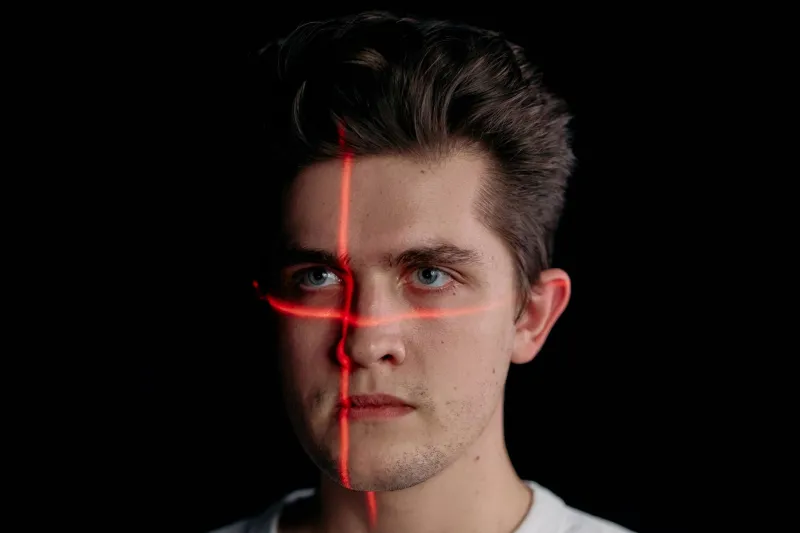
Modern deepfake detection systems layer multiple models on top of each other. There's facial inconsistency analysis, which looks for the subtle pixel-level artifacts that generative models leave behind — things like unnatural blinking patterns, ear geometry that doesn't match the rest of the face, or lighting that behaves slightly wrong when a head turns. There's temporal coherence checking, which analyzes whether a face moves the way human faces actually move across frames. And increasingly, there are identity verification cross-reference systems that compare uploaded content against a database of verified performer profiles.
One platform security engineer — who asked not to be named because their employer doesn't publicize its detection infrastructure — described the process as "running a video through about a dozen filters simultaneously, and then having a human reviewer look at anything that scores above a certain confidence threshold."
That human review component is important. Fully automated systems, even good ones, generate false positives at a rate that would make them unusable without human oversight. A legitimate video with unusual lighting, heavy post-production color grading, or even certain types of special effects makeup can trip deepfake detectors. Getting that balance right is genuinely difficult.
The False Positive Problem Nobody Talks About
Here's the uncomfortable math: if a platform processes tens of thousands of uploads per day and your detection system flags 0.5% of them incorrectly as deepfakes, you're generating hundreds of false positives daily. Each one of those is a real creator whose legitimate content gets held up, delayed, or in some cases incorrectly removed — which means lost income and a support ticket that costs the platform time and money to resolve.
"The false positive rate is genuinely one of our biggest operational headaches," said a content policy manager at a mid-size adult streaming platform who spoke on background. "You're trying to protect performers from having their likeness stolen, but you also can't make every creator feel like they're under suspicion every time they upload. That's a really hard needle to thread."
Platforms are responding to this in a few ways. Some are building tiered trust systems, where verified creators with long upload histories get expedited review. Others are investing in better explainability tools — systems that don't just flag a video but tell the review team why it was flagged, so humans can make faster, more accurate final calls.
The Adversarial Upgrade Cycle
Here's the part that keeps security teams up at night: the same advances that make detection tools more accurate also make generation tools better at evading them. When researchers publish a new detection method — which they do, because academic publishing is how the field advances — bad actors read those papers too.
"Every time we improve our detection, we're also essentially publishing a roadmap for how to get around it," one ML engineer explained. "The generation side learns from what we catch. It's genuinely adversarial in the machine learning sense of the word."
This is why platforms aren't relying solely on technical detection. Some are investing heavily in proactive identity infrastructure — requiring verified biometric data from performers at onboarding, building robust performer registries, and participating in cross-platform information sharing consortiums that flag known bad actors.
The CSAM detection infrastructure built over the past two decades actually provides some useful scaffolding here. Hash-matching databases, which compare uploaded content against libraries of known illegal material, are being adapted for deepfake detection in limited ways. But the challenge is that unlike CSAM — where the content itself is illegal — deepfakes exist on a more complex legal spectrum, and building a comprehensive hash library is harder when the category of harmful content is this broad.
What It Costs to Stay in the Fight
Running real-time deepfake detection at scale is not cheap. GPU inference costs alone for processing video at upload time can run into the hundreds of thousands of dollars annually for a large platform. Add human review staff, model retraining, and the ongoing R&D needed to stay current, and you're looking at a significant operational line item.
Smaller platforms are at a real disadvantage here. The economics of detection infrastructure favor scale — a platform with millions of uploads can amortize those costs more easily than one with hundreds of thousands. This creates a two-tier landscape where the biggest players have increasingly sophisticated defenses and smaller independent platforms are more exposed.
Some in the industry are pushing for shared infrastructure solutions — essentially a detection-as-a-service layer that smaller platforms could plug into without building everything from scratch. Whether that model can work commercially and practically is still being figured out.
Where This Is All Heading
The honest answer from everyone we spoke with is that this doesn't get easier. Generation technology will keep improving. Detection technology will keep chasing it. The gap between what's possible and what's catchable will fluctuate but never fully close.
What gives platform security teams cautious optimism isn't any single technical breakthrough — it's the combination of better tooling, stronger legal frameworks like the DEFIANCE Act, and growing industry coordination. The detection war won't be won by any one platform's AI model. It'll be won, if it's won at all, by making the ecosystem hostile enough to bad actors that the effort stops being worth it.
For the performers whose faces and bodies are on the line, "cautious optimism" probably doesn't feel like enough. But inside the server rooms where this fight is actually happening, it's what the engineers are working with — and they're working hard.